
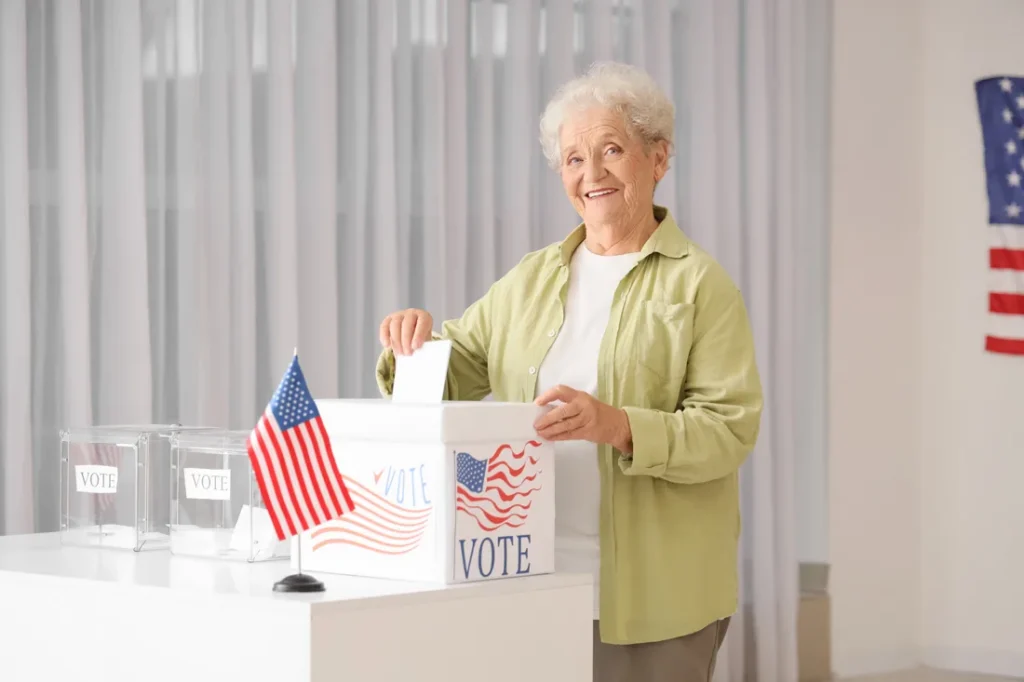
Election Day is Tuesday, November 3, 2026. Voting is a fundamental right of all Americans; therefore, federal laws are in place to ensure everyone has the right to vote regardless of where they live. This ensures that residents in assisted living or skilled nursing have the necessary accommodations to vote.
Voting Options for Older Adults Who Need Assistance
You can vote in person on Election Day or by absentee ballot prior to Election Day. Many senior living or long-term care communities will provide transportation to the polls on Election Day.
If voting by absentee ballot, you need to fill out and return an application, and then the absentee ballot will be mailed to you. Find the absentee application and more information here.
The deadline to request an absentee ballot varies by state, so it’s important to check application requirements in the state where you’re registered and apply as soon as you can to avoid missing deadlines. For example, in Ohio, the board of elections must receive your absentee ballot request by the close of business seven days before Election Day. In Michigan, absentee ballot applications must be submitted by 5 p.m. the Friday before Election Day, but it is recommended to apply online at least 15 days before Election Day to ensure there is enough time to receive and return the ballot.
When returned by mail, absentee ballots must be received by the end of Election Day to be counted. Absentee ballots can also be returned in-person before the close of the polls on Election Day.
Requesting Assistance and Ensuring Accessibility With Your Vote
If you need assistance with your ballot because of a disability, you may bring someone with you to help you vote. You may ask anyone to help you vote unless they are on the ballot.
Under the Americans with Disabilities Act, you have the right to ask for accessibility accommodations that make it easier for you to vote. Examples of accessibility accommodations include the following:
- Accessible parking places
- Level pathways with unobstructed routes from parking to the building
- Voting and election materials in large print
- Entrances and doorways at the voting location that are at least 32 inches wide
- Wheelchair-accessible voting locations
- At least one accessible voting device at each location (audio, large text, other visual aids)
- Poll workers to help you use accessible voting devices
Contact your local board of elections to communicate your needs and ensure a plan is in place before Election Day.
Make Your Voice Heard in Each Election
Needing assistance, from mobility and marking a ballot to simply getting to the polls, shouldn’t deter you from voting in the next election. Federal law guarantees accessible polling places, the right to bring a helper of your choice, and a range of absentee and mail-in options designed to meet your needs. Planning ahead goes a long way toward making sure your voice is heard.
Learn More About Voting Here.
This blog was updated in May 2026.