
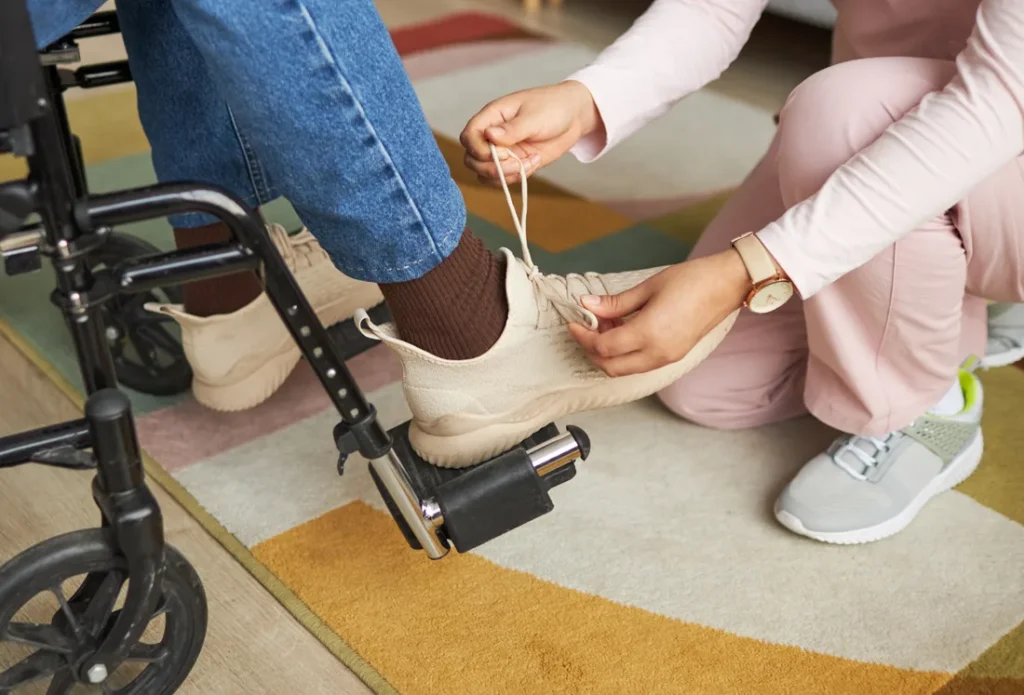
As we age, our feet undergo natural changes that can affect balance, mobility, and fall risk. In fact, one in four older adults experiences a fall each year. Choosing the right shoes can play a key role in reducing fall risk and increasing safety and independence. Here are our top tips to help seniors select safe, supportive footwear.
Prioritize Non-Slip Soles
Slip-resistant or textured soles are essential for reducing fall risk, especially on smooth or wet surfaces like a kitchen or during inclement weather. Look for shoes with rubber outsoles that provide good traction indoors and outdoors.
Ensure a Proper Fit
Feet tend to swell throughout the day, so it’s best to shop for shoes in the afternoon when feet are at their largest. Always try on shoes with the type of socks you plan to wear daily and bring any orthotics you use. Watch for these signs to ensure a proper fit:
- There’s about a thumb’s width of space between the longest toe and the end of the shoe.
- The heel fits snugly without slipping.
- The shoe supports the full width of the foot without pinching.
Avoid shoes that are too loose or worn out, as they can increase tripping hazards.
Choose Low, Wide Heels
High or narrow heels can compromise balance. Opt for shoes with low (no more than one inch), wide heels or completely flat soles to enhance stability. This helps maintain a lower center of gravity and reduces strain on joints.
Wear Supportive Shoes at All Times
Never walk barefoot, in socks, or in slippers with open heels – even indoors. These types of shoes offer little to no support and significantly increase fall risk. Instead, choose supportive slippers or house shoes with enclosed heels and non-slip soles.
Related blog: See Our Top Tips for Winter Safety >>
Look for Lightweight, Breathable Materials
Shoes made from breathable materials help keep your feet dry, reducing the risk of blisters and fungal infections. Lightweight shoes also reduce leg fatigue, making it easier to stay active.
Balance Convenience with Security
While slip-on shoes are easier to get on and off, they can sometimes compromise stability. Look for shoes with adjustable straps, laces, or velcro closures to ensure a secure fit.
Resource: Get a Footwear Fact Sheet from the CDC >>
Consult a Healthcare Professional
If you’re suffering from foot pain or experiencing a medical condition that affects your feet or balance, consult a podiatrist. They can recommend therapeutic footwear or orthotics tailored to your individual needs. Physical therapists can also help strengthen foot and ankle muscles to improve balance.
Invest in Proper Footwear
Investing in proper footwear is a simple way to enhance mobility, prevent falls, and maintain independence as we age. By focusing on fit, support, and safety features, seniors can stay active and confident during their daily activities. Find more on safety in this home safety checklist for seniors.
This blog was updated in March 2026.