
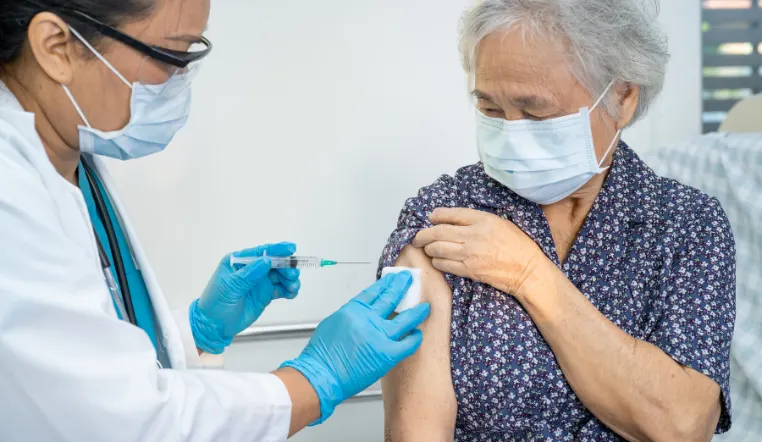
As we get older, staying up to date on vaccinations becomes an important part of protecting our health. Certain infections can be more serious for older adults, particularly those living with chronic health conditions or weakened immune systems.
If you or a senior loved one is over 50, it may be helpful to review your vaccination history with your healthcare provider and ask which vaccines are recommended based on your age, health conditions, medications and previous vaccinations.
Here are several vaccines adults over 50 should discuss with their healthcare provider.
1. Flu Vaccine
The seasonal flu vaccine is recommended every year for adults, including older adults.
Influenza can be more serious as we age and may contribute to complications such as pneumonia or worsening of existing heart, lung or other chronic conditions. The CDC recommends annual flu vaccination and notes that flu vaccination is particularly important for people with chronic health conditions.
For adults 65 and older, certain flu vaccines are preferred, including higher-dose and adjuvanted vaccines, because they are designed to produce a stronger immune response in older adults. Your healthcare provider can help determine which option is appropriate.
Ask your doctor: When should I get my annual flu vaccine, and which type is right for me?
2. Shingles Vaccine
Shingles is caused by the same virus that causes chickenpox. After someone has chickenpox, the virus can remain inactive in the body and reactivate later in life.
Shingles can cause a painful rash and, in some people, long-lasting nerve pain known as postherpetic neuralgia.
The CDC recommends two doses of the shingles vaccine, Shingrix, for adults age 50 and older. The doses are generally given two to six months apart. Shingrix is also recommended for adults age 19 and older who have weakened immune systems because of disease or treatment.
Even if you have had shingles before, vaccination may still help protect against future episodes.
Ask your doctor: Have I received both recommended doses of the shingles vaccine?
3. Pneumococcal Vaccine
Pneumococcal bacteria can cause several serious infections, including pneumonia, meningitis and bloodstream infections.
Pneumococcal vaccination is now recommended for all adults age 50 and older who have not previously received a pneumococcal conjugate vaccine, with the specific vaccine and schedule depending on vaccination history and individual circumstances. Available pneumococcal conjugate vaccines include PCV15, PCV20 and PCV21.
People with certain medical conditions may need pneumococcal vaccination at younger ages or may have additional recommendations.
Because there are different pneumococcal vaccines and schedules, it’s especially important to review your previous vaccination records with your healthcare provider.
Ask your doctor: Have I received the pneumococcal vaccines I need based on my age and health history?
4. Tdap and Tetanus Vaccines
Tdap protects against tetanus, diphtheria and pertussis (whooping cough).
Adults who have never received a Tdap vaccine should receive one dose. After that, adults generally need a Td or Tdap booster every 10 years. A Tdap or Td vaccine may also be recommended following certain wounds or injuries.
Pertussis can cause serious respiratory illness, and older adults or people with certain underlying health conditions may be at greater risk for complications.
Ask your doctor: When was my last tetanus or Tdap vaccination?
5. RSV Vaccine
Respiratory syncytial virus, commonly called RSV, can cause serious respiratory illness in older adults.
Current CDC recommendations call for all adults age 75 and older to receive an RSV vaccine. Adults ages 50 through 74 who are at increased risk for severe RSV illness are also recommended to receive the vaccine. Risk factors can include chronic heart or lung disease and weakened immune systems.
Unlike the flu vaccine, the RSV vaccine is not currently an annual vaccine. If you’ve already received an RSV vaccine, the CDC says you do not need another dose at this time.
Ask your doctor: Does my age or health history put me in a group that should receive the RSV vaccine?
6. COVID-19 Vaccine
COVID-19 can cause more serious illness in older adults and people with certain underlying health conditions.
The CDC recommends that adults stay up to date with the currently recommended COVID-19 vaccination schedule. Recommendations can change as new vaccines become available and as guidance is updated, so your healthcare provider or pharmacist can help determine what is appropriate based on your age, health history and previous doses.
Ask your doctor: Am I up to date with the current COVID-19 vaccine recommendations?
Other Vaccines May Be Recommended
The vaccines listed above aren’t necessarily the only vaccines an individual may need.
Depending on your health history, travel plans, occupation, living situation, previous vaccinations and other risk factors, your healthcare provider may recommend additional vaccines, such as hepatitis A or B, MMR, varicella or others.
This is particularly important for people who have weakened immune systems or chronic health conditions, because their vaccination recommendations may differ from those of other adults.
Make Vaccines Part of Your Preventive Healthcare
Keeping track of vaccinations can sometimes feel overwhelming, especially when recommendations change over time. A good place to start is by gathering your vaccination records and making an appointment with your physician, pharmacist or other healthcare provider.
Before your appointment, consider asking:
- Which vaccines do I need based on my age?
- Am I up to date on my flu and COVID-19 vaccines?
- Have I received the shingles vaccine?
- Do I need a pneumococcal vaccine?
- When was my last Tdap or tetanus booster?
- Should I receive an RSV vaccine?
- Do any of my medications or health conditions change my vaccination recommendations?
- Are there vaccines I may have missed earlier in life?
A Final Reminder
Vaccines are an important part of preventive healthcare, but recommendations are not one-size-fits-all. Age, medical conditions, medications, immune status and previous vaccination history can all affect which vaccines are appropriate.
If you’re over 50—or helping an aging parent or loved one—talk with a healthcare professional about creating an individualized vaccination plan.
For the most current recommendations, visit the Centers for Disease Control and Prevention (CDC) or talk with your healthcare provider.